|
  Before
taking this test in 2024, I would have described my background
as 3/4 German and 1/4 Irish. The parents of Grandma and
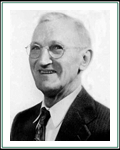
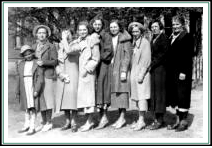
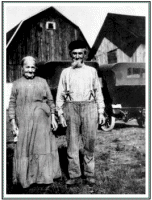
Grandpa Heiden and Grandpa Roggerman (right) were from Germany
and the grandfather of Grandma Roggerman, whose maiden
name was Getty, came from Northern Ireland. So, how did I
end up with percentages of my genetic background being
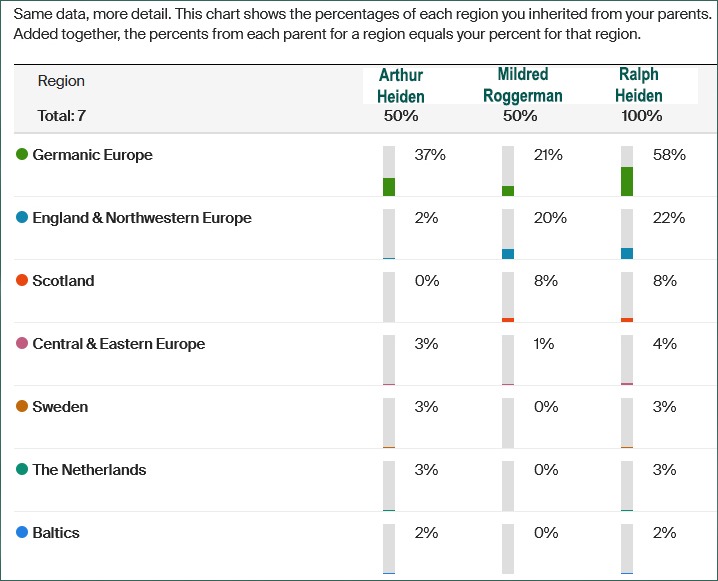
from Germanic Europe, England & Northwestern Europe, Scotland, Central &
Eastern Europe, Sweden, The Netherlands and the Baltics?
And, why is there no specific mention of Ireland? Before
taking this test in 2024, I would have described my background
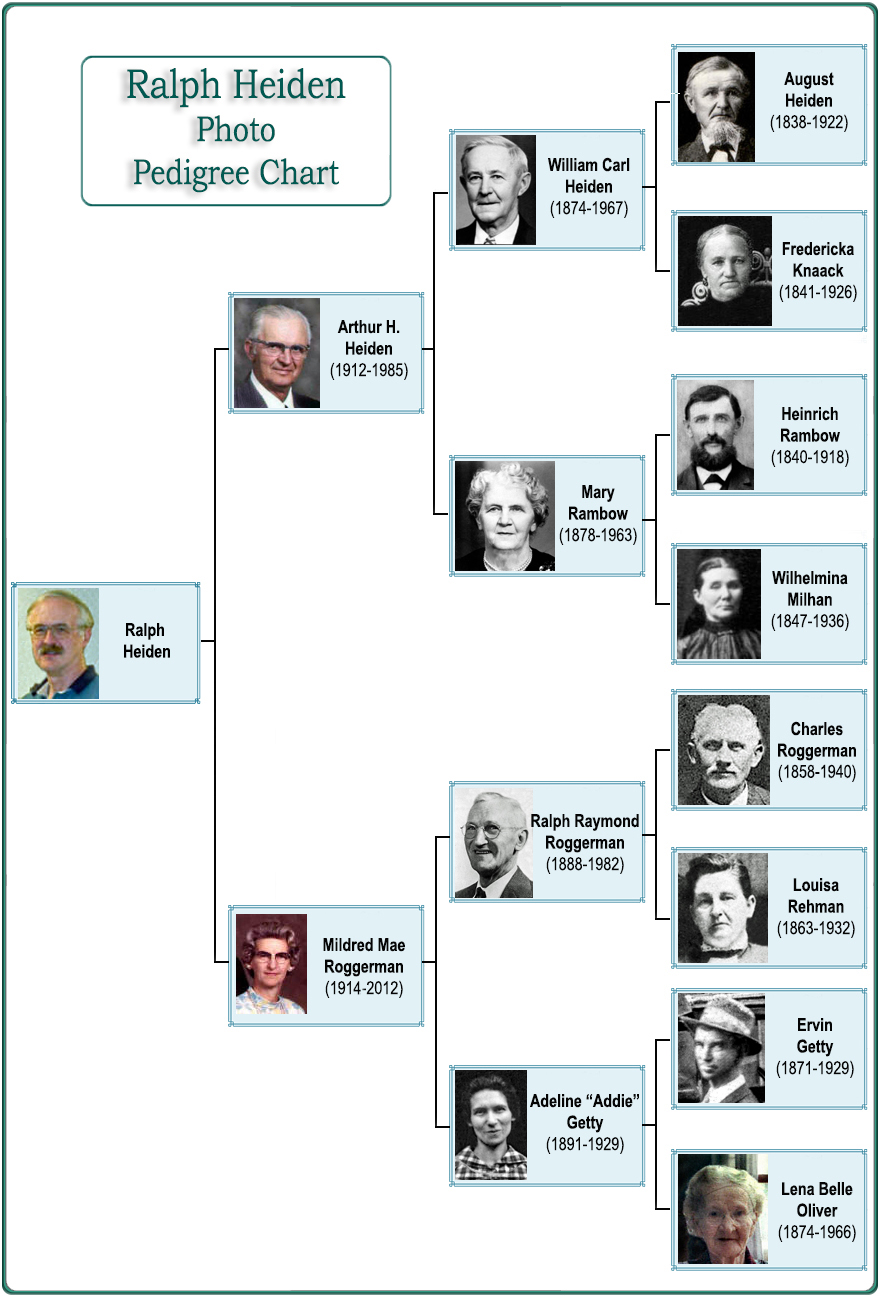
as 3/4 German and 1/4 Irish. The parents of Grandma and
Grandpa Heiden and Grandpa Roggerman (right) were from Germany
and the grandfather of Grandma Roggerman, whose maiden
name was Getty, came from Northern Ireland. So, how did I
end up with percentages of my genetic background being
from Germanic Europe, England & Northwestern Europe, Scotland, Central &
Eastern Europe, Sweden, The Netherlands and the Baltics?
And, why is there no specific mention of Ireland?
 From reading the
information in a couple of books and at the Ancestry
website, it becomes clear why they call these numbers
"estimates". First, while many million people have taken
DNA tests in recent years and there are large databases
built from the results, it still represents a very small
sample when you consider that there are currently over 8
billion people on the planet. More billions existed in
our past generations. Science has made huge
advances in this area but there is still a very long way
to go. From reading the
information in a couple of books and at the Ancestry
website, it becomes clear why they call these numbers
"estimates". First, while many million people have taken
DNA tests in recent years and there are large databases
built from the results, it still represents a very small
sample when you consider that there are currently over 8
billion people on the planet. More billions existed in
our past generations. Science has made huge
advances in this area but there is still a very long way
to go.
 Second, I know the
countries from which my great grandparents emigrated but
I do not know where my great, great, great, great, great
grandparents lived. They estimate that our DNA results
can be extrapolated back to people living about 500
years ago on average. So, my fourth great grandfather
may have married a woman whose ancestors came from
Sweden or The Netherlands. The testing company can only
say that some population in Sweden carries certain
patterns in the thousands and thousands of DNA strands
in our cells to say that a small part of my background
might come from that area of Europe. Second, I know the
countries from which my great grandparents emigrated but
I do not know where my great, great, great, great, great
grandparents lived. They estimate that our DNA results
can be extrapolated back to people living about 500
years ago on average. So, my fourth great grandfather
may have married a woman whose ancestors came from
Sweden or The Netherlands. The testing company can only
say that some population in Sweden carries certain
patterns in the thousands and thousands of DNA strands
in our cells to say that a small part of my background
might come from that area of Europe.
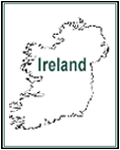 My Irish ancestors have
only been traced back a few generations to those who
lived in Northern Ireland in the early 1800s. Perhaps my
sixth great grandfather was from Scotland and married a
woman from England and their grandson moved to Ireland
200 years ago. So, he was only there for one or two
generations and the amount of DNA would be unidentified
with today's testing standards. Who knows? [See the note
below] My Irish ancestors have
only been traced back a few generations to those who
lived in Northern Ireland in the early 1800s. Perhaps my
sixth great grandfather was from Scotland and married a
woman from England and their grandson moved to Ireland
200 years ago. So, he was only there for one or two
generations and the amount of DNA would be unidentified
with today's testing standards. Who knows? [See the note
below]
DNA tests are very
reliable if two people currently alive or recently
deceased are involved. That is why it can be legally
used to determine paternity. If you watch the PBS
series, Finding Your Roots, you know how often it is
discovered that someone the show's subject thought was
an ancestor turns out to be actually not related.
These are a few of the
reasons why DNA testing alone may not answer all or even
most of the questions about your family. That is why it
must be combined with the paper trail and even family
stories to achieve any certainty in an individual
person's genealogy.

 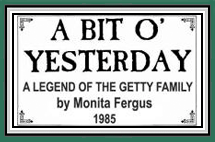 While
preparing this website for posting, I was
looking over my Irish ancestors in the Getty Book section. That document speculates that a
Reverend Adam Getty, who in 1666 moved from Scotland to
the same small town in Ireland where the rest of our Getty's
originated, might be the beginning of our clan.
Unfortunately, the author, Monita Fergus, was not able to make a verified
link between Adam and the earliest Getty of record, John
Getty, Sr who was born in 1788. So...the search continues. While
preparing this website for posting, I was
looking over my Irish ancestors in the Getty Book section. That document speculates that a
Reverend Adam Getty, who in 1666 moved from Scotland to
the same small town in Ireland where the rest of our Getty's
originated, might be the beginning of our clan.
Unfortunately, the author, Monita Fergus, was not able to make a verified
link between Adam and the earliest Getty of record, John
Getty, Sr who was born in 1788. So...the search continues.
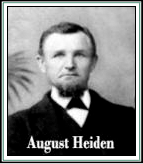 Also, August Heiden's
Uncle Ludwig was living in Sweden according to an
1883
letter we found. He had four children by his first wife
who was German and two more by his second wife who was
Swedish. Some of his children were living in Sweden but
others had settled in
Denmark, Silesia (central Europe) and one son emigrated to Boston,
Massachusetts. Of course, these would be August's first
cousins and would share about 12.5% of his DNA with him. This
probably accounts for the appearance of some of the regions
represented in my DNA results. Also, August Heiden's
Uncle Ludwig was living in Sweden according to an
1883
letter we found. He had four children by his first wife
who was German and two more by his second wife who was
Swedish. Some of his children were living in Sweden but
others had settled in
Denmark, Silesia (central Europe) and one son emigrated to Boston,
Massachusetts. Of course, these would be August's first
cousins and would share about 12.5% of his DNA with him. This
probably accounts for the appearance of some of the regions
represented in my DNA results.
As I continued to explore my maternal great
grandmother, Lena Belle (Oliver, Getty) Monk, I found that
the Olivers originated in a region just southeast of London,
England. So, the regions defined and redefined by
Ancestry,com are making more sense to me.
|








 In
2024, I submitted a saliva sample to Ancestry.com to
have my DNA analyzed. The following is my very basic
understanding of genetics, the way these tests work and
how to use the results for genealogical research.
Needless to say, there have been many books written on
these subjects so it can be very complicated.
In
2024, I submitted a saliva sample to Ancestry.com to
have my DNA analyzed. The following is my very basic
understanding of genetics, the way these tests work and
how to use the results for genealogical research.
Needless to say, there have been many books written on
these subjects so it can be very complicated.



 Deoxyribonucleic
acid (DNA) in our cells contains the genetic memory which passes all
manner of traits from one generation to the next in our genes. Half of
our DNA comes from our biological father and the other half from our
biological mother. Although that percentage does not change, the
specific factors in the DNA will be different from one child to another.
That is why each of us is a unique human being.
Deoxyribonucleic
acid (DNA) in our cells contains the genetic memory which passes all
manner of traits from one generation to the next in our genes. Half of
our DNA comes from our biological father and the other half from our
biological mother. Although that percentage does not change, the
specific factors in the DNA will be different from one child to another.
That is why each of us is a unique human being.
 The
other 22 pairs of chromosomes contain millions of gene pairs arranged in
a huge number of combinations. For each species, however, all the genes
are the same except for a little under 1%. The 99% of genes determine
the basic traits that make us identifiable as a human such as bones, one
stomach, fingers, skin, etc.
The
other 22 pairs of chromosomes contain millions of gene pairs arranged in
a huge number of combinations. For each species, however, all the genes
are the same except for a little under 1%. The 99% of genes determine
the basic traits that make us identifiable as a human such as bones, one
stomach, fingers, skin, etc.

 Several million people around the world have taken a DNA test over the
past couple of decades. Millions more now submit a sample for testing
each year. Genetic scientists have been able to determine that, if two
people share a certain percentage of their DNA, they must be related.
Several million people around the world have taken a DNA test over the
past couple of decades. Millions more now submit a sample for testing
each year. Genetic scientists have been able to determine that, if two
people share a certain percentage of their DNA, they must be related.
 Each of us receives 50% of our DNA from each of our biological parents.
They, in turn, received 50% each from their parents and so on back through the
history of the human species. So, if your test shows that you share around 50%
of your DNA with someone, they must be a full sibling.
Grandparents, aunts, uncles, nieces and nephews would share about 25% of
the same DNA while first cousins share about 12.5%. This can be carried
out to where a 5th cousin may share only 0.05% of their DNA with you.
Each of us receives 50% of our DNA from each of our biological parents.
They, in turn, received 50% each from their parents and so on back through the
history of the human species. So, if your test shows that you share around 50%
of your DNA with someone, they must be a full sibling.
Grandparents, aunts, uncles, nieces and nephews would share about 25% of
the same DNA while first cousins share about 12.5%. This can be carried
out to where a 5th cousin may share only 0.05% of their DNA with you.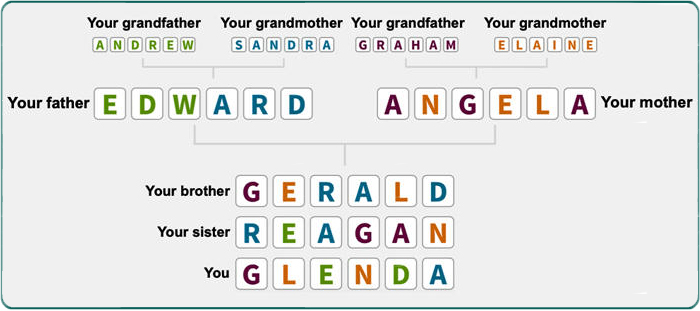
 Determining an exact relationship between two people has
to take into account such things as the age of the individuals. For
instance, a person who shares about 25% of your DNA but is only 2 years
older than your father, is most likely an uncle and not your grandfather.
Determining an exact relationship between two people has
to take into account such things as the age of the individuals. For
instance, a person who shares about 25% of your DNA but is only 2 years
older than your father, is most likely an uncle and not your grandfather. As
of May, 2026, Ancestry.com has listed over 1,050 people
who share <1% to as much as 52% (my sister, Kay) of my
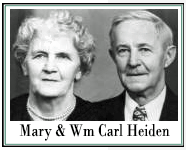
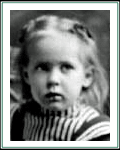
DNA. Also, the picture of the child above is of Edna (Heiden)
Berns who was born in 1898 as the first child of Wm Carl
and Mary (Rambow) Heiden.
As
of May, 2026, Ancestry.com has listed over 1,050 people
who share <1% to as much as 52% (my sister, Kay) of my
DNA. Also, the picture of the child above is of Edna (Heiden)
Berns who was born in 1898 as the first child of Wm Carl
and Mary (Rambow) Heiden.
 The
types of results that you get from a DNA test depends on the type of
test you purchase. Certain tests will include a list of genetic factors
in you DNA that might lead to specific health concerns during your life
or account for individual physical traits.
One category of tests will check the Y-chromosome which is directly
passed down from one male to his offspring throughout the generations.
This is often used to determine paternity cases.
The
types of results that you get from a DNA test depends on the type of
test you purchase. Certain tests will include a list of genetic factors
in you DNA that might lead to specific health concerns during your life
or account for individual physical traits.
One category of tests will check the Y-chromosome which is directly
passed down from one male to his offspring throughout the generations.
This is often used to determine paternity cases. A second result of the
type of test I took from Ancestry.com is to associate you with people in
various geographical regions of the world. Keep in mind that these
results only mean that certain people in that region who have been tested share some of your DNA characteristics. It does not automatically
mean that your direct ancestors originated in that area. See the
next section for more on this topic.
A second result of the
type of test I took from Ancestry.com is to associate you with people in
various geographical regions of the world. Keep in mind that these
results only mean that certain people in that region who have been tested share some of your DNA characteristics. It does not automatically
mean that your direct ancestors originated in that area. See the
next section for more on this topic.
 In the not too distant past, it would take many days of computer time to
calculate the relationship of just one person to others in the huge databases
being built around the world. Now, the same problem can be completed in
a relatively short time with current computer systems.
In the not too distant past, it would take many days of computer time to
calculate the relationship of just one person to others in the huge databases
being built around the world. Now, the same problem can be completed in
a relatively short time with current computer systems.
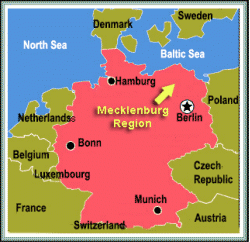 1) Direct genetic ancestors
of yours originated in a region. Your third great grandfather may
have emigrated from France to Switzerland where your second great
grandfather was born, raised his family and later emigrated to America.
Therefore, you could say you have French and Swiss roots.
1) Direct genetic ancestors
of yours originated in a region. Your third great grandfather may
have emigrated from France to Switzerland where your second great
grandfather was born, raised his family and later emigrated to America.
Therefore, you could say you have French and Swiss roots.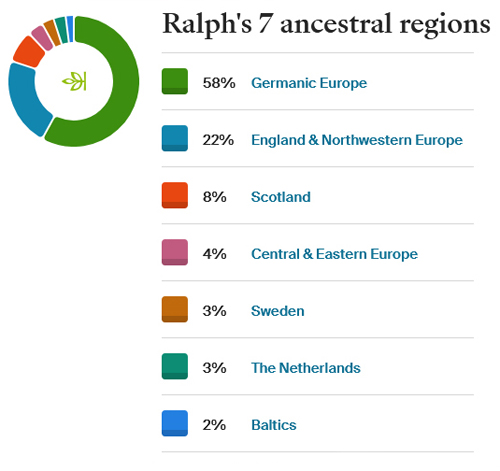
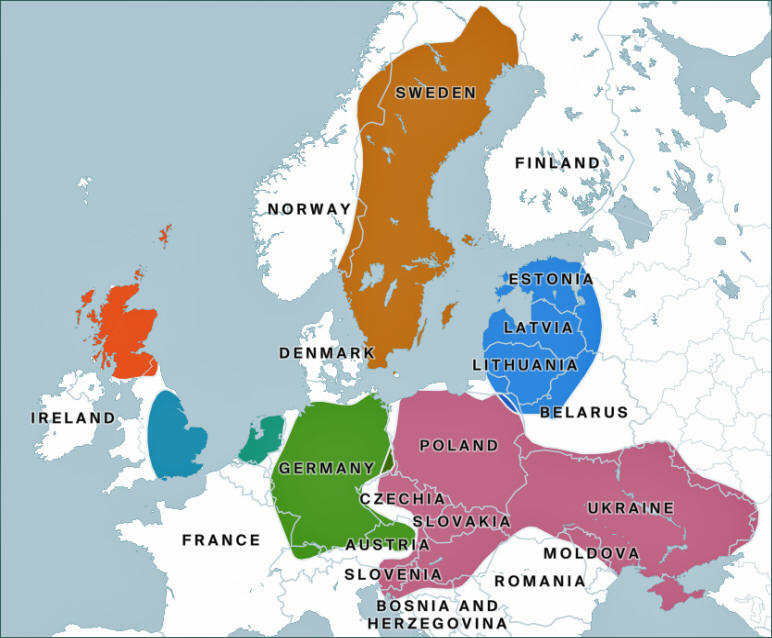
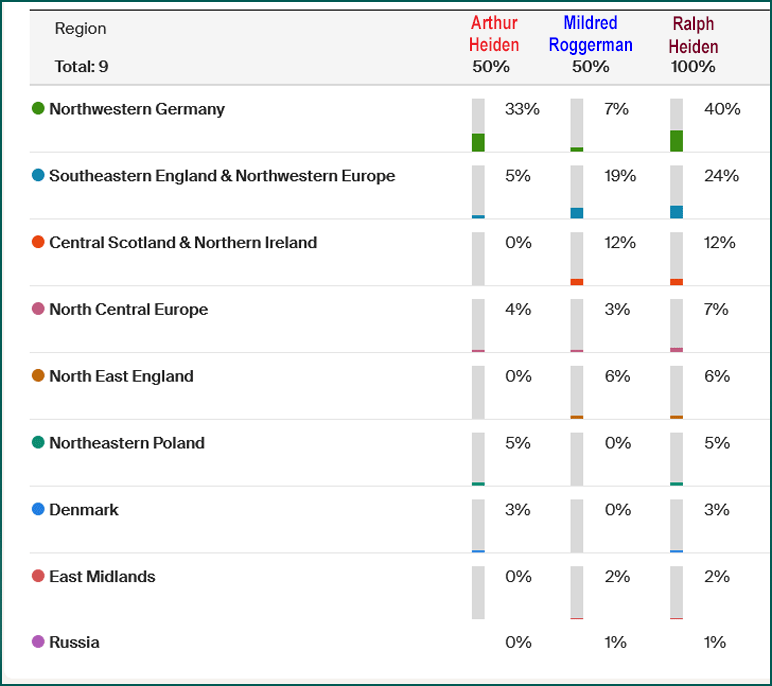
 AncestryDNA
included the following information about
changes in the regions which pertain to
my test results:
AncestryDNA
included the following information about
changes in the regions which pertain to
my test results: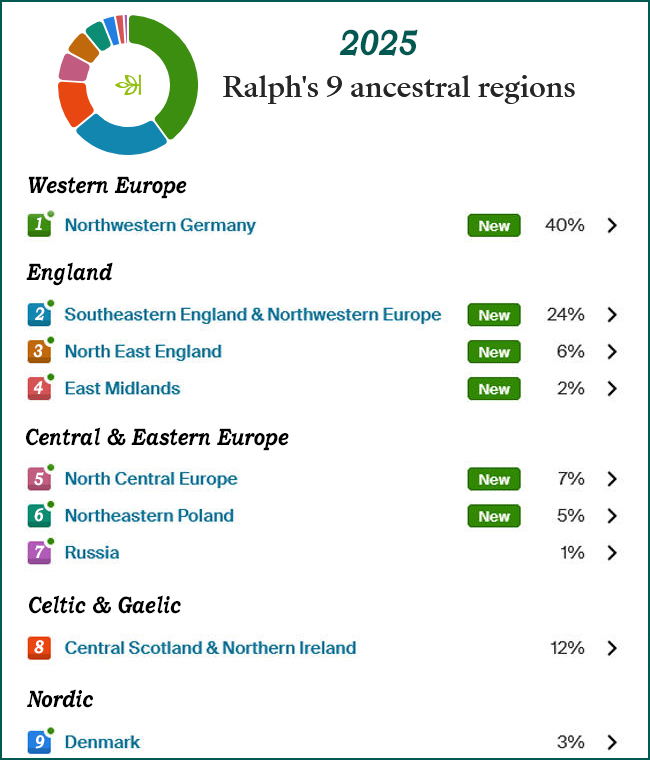
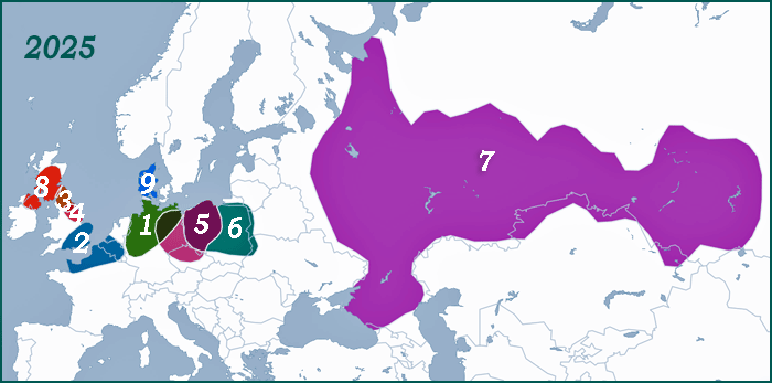
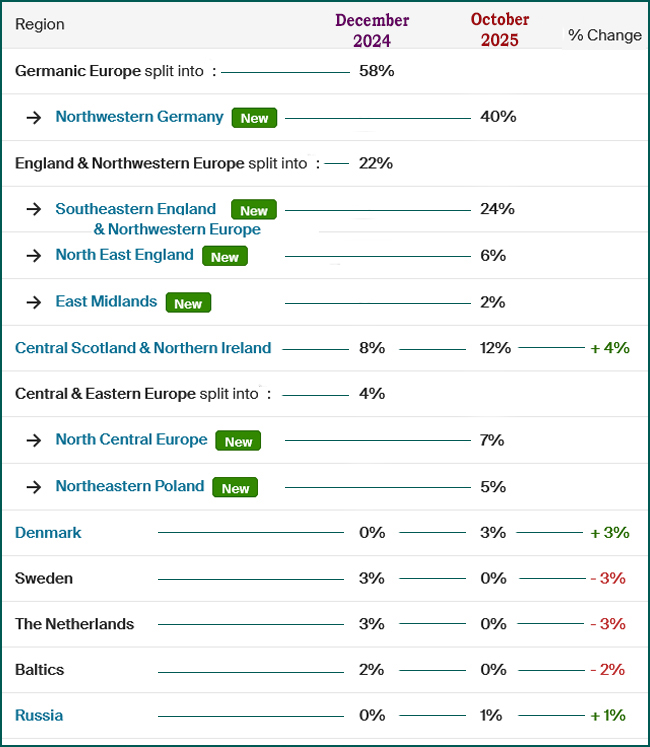


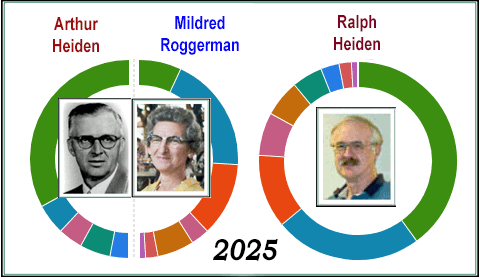
 As
mentioned above, 50% of my DNA comes from each of my
biological parents, Arthur and Mildred (Roggerman)
Heiden pictured to the left. Genetic variations come about
because each sperm and each egg have unique mixtures of
DNA. For siblings, only identical twins have the same
DNA makeup. They come from one sperm and one egg that
split in two during conception. Fraternal twins are
different because they come from two different eggs
fertilized at the same time.
As
mentioned above, 50% of my DNA comes from each of my
biological parents, Arthur and Mildred (Roggerman)
Heiden pictured to the left. Genetic variations come about
because each sperm and each egg have unique mixtures of
DNA. For siblings, only identical twins have the same
DNA makeup. They come from one sperm and one egg that
split in two during conception. Fraternal twins are
different because they come from two different eggs
fertilized at the same time.
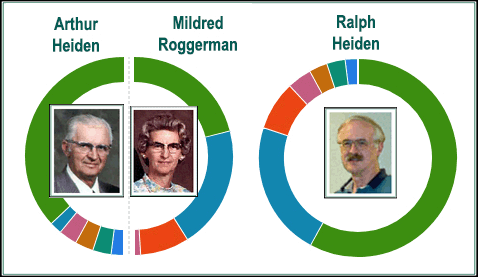
 In
the 2025 interpretation of the test results, my father
shares DNA with people in five different regions in
Europe while my mother appears in seven regions. They
share listings in only three regions. The Central
Scotland & Northern Ireland connection reflects a group
called the
In
the 2025 interpretation of the test results, my father
shares DNA with people in five different regions in
Europe while my mother appears in seven regions. They
share listings in only three regions. The Central
Scotland & Northern Ireland connection reflects a group
called the