|
 |
|
 |
|
 |
|
 |
|
|
|
 |
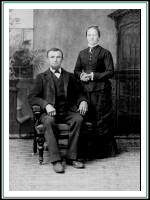 There are many things that we know about
August and Rika (Knaack) Heiden
(left) but one key fact that is still to be
discovered is exactly why they left Germany. There are many things that we know about
August and Rika (Knaack) Heiden
(left) but one key fact that is still to be
discovered is exactly why they left Germany.
Economic conditions in
northern Germany were very bad during this time in history but to leave
one’s ancestral home and sail across the ocean to a new, unknown
homeland was still a monumental decision. It was also probably
an irreversible one since people often spent their last mark or pfennig
paying for the trip. There would be no turning back for most of
them.
 We also do not know the exact date that
August and Rika (Knaack) Heiden left the Port of Hamburg on their journey
to America. We do know that papers were prepared in Germany in
April of 1873 in which they had to
denounce their citizenship and
be granted
permission to leave Mecklenburg-Schwerin. We also do not know the exact date that
August and Rika (Knaack) Heiden left the Port of Hamburg on their journey
to America. We do know that papers were prepared in Germany in
April of 1873 in which they had to
denounce their citizenship and
be granted
permission to leave Mecklenburg-Schwerin.
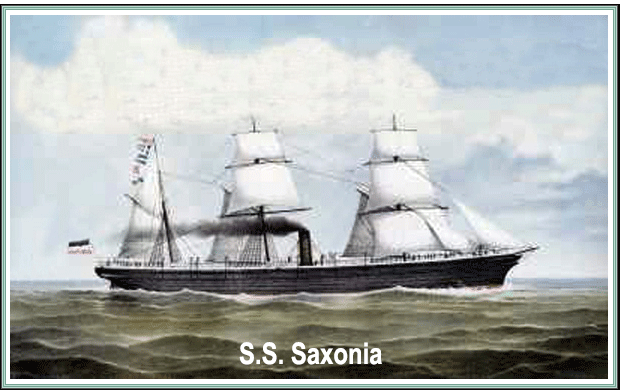
They made the trip on the German
freighter, S.S.
Saxonia, which from the picture
above,
appears to have been a combination of steam and sail powered.
The drawing is a representation of the Saxonia found in
the book, Ships of Our Ancestors. Odds are that it was
not a luxury craft and it is likely that August, Rika and their
children were not in the “First Class” section.
 The voyage itself may have taken as
little as a week or up to two weeks or more depending on whether they
used steam power or saved money by setting sails once they left
port. Either way, it would be safe to think that the Heiden’s
were very happy when they were able to see dry land again. The
harbor and the skyline of New York City must have been a welcome
sight as they approached on June 4, 1873. The voyage itself may have taken as
little as a week or up to two weeks or more depending on whether they
used steam power or saved money by setting sails once they left
port. Either way, it would be safe to think that the Heiden’s
were very happy when they were able to see dry land again. The
harbor and the skyline of New York City must have been a welcome
sight as they approached on June 4, 1873.
 The Statue of
Liberty would not have greeted our ancestors since it
was not dedicated until 1886. The Statue of
Liberty would not have greeted our ancestors since it
was not dedicated until 1886.
 Most
people think of Ellis Island when they hear a discussion
of 19th century immigration. However, Ellis Island did
not begin functioning until 1892 so the Heidens,
Fred Milhan and a
year later, the
Rambows, entered through another
facility. Castle Garden Emigrant Depot (pictured to the
right) was in use from 1855 to 1890 and the largest
ethnic group that passed through during those years were
the Germans. Most
people think of Ellis Island when they hear a discussion
of 19th century immigration. However, Ellis Island did
not begin functioning until 1892 so the Heidens,
Fred Milhan and a
year later, the
Rambows, entered through another
facility. Castle Garden Emigrant Depot (pictured to the
right) was in use from 1855 to 1890 and the largest
ethnic group that passed through during those years were
the Germans.
 Each ship that entered the port had to
present a list of passengers and cargo to the port authorities
for clearance. These lists have been compiled and are on
record at the National Archives in Washington D.C. The copy of the captain’s log sworn to by C.D. Brandt, Master
of the
Saxonia, upon landing in
New York
includes August and his family
listed as passengers numbers 303 to 307. There were
probably around 400 to 500 people on board during this trip. Each ship that entered the port had to
present a list of passengers and cargo to the port authorities
for clearance. These lists have been compiled and are on
record at the National Archives in Washington D.C. The copy of the captain’s log sworn to by C.D. Brandt, Master
of the
Saxonia, upon landing in
New York
includes August and his family
listed as passengers numbers 303 to 307. There were
probably around 400 to 500 people on board during this trip.
Also listed was a man named, “Heiden, Christ., age 56, and
Sophie, 28, his "daughter” but we do not know what, if any,
relation they might have been to our branch of the Heiden family.
We will continue to look into this in the future.
There were four documents in the old wooden box which
came from Agnes Heiden in 1972.
They appear to be related to the impending
emigration of
August Heiden
and his family. One of them
contained the names and ages of the entire family.
Click Here for
more information including translations
of these documents.
|
|
|
|
 |
|
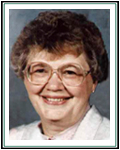  In
the early 2000s, my cousin and godmother, Mary Lou (Heiden)
Opfermann (right) mentioned to me that there were
some old Heiden relatives' graves in the
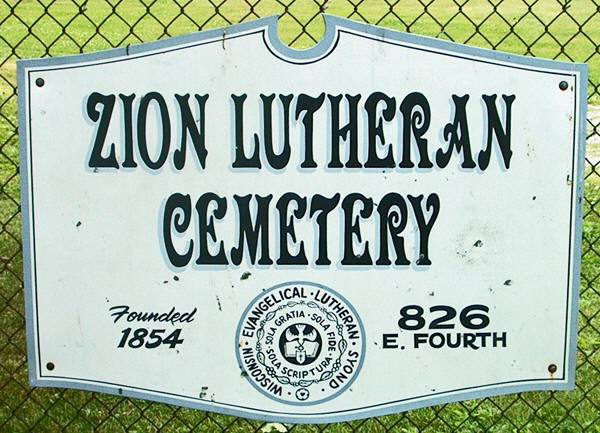
Zion
Lutheran Church Cemetery near where she lived in
Monroe, Michigan. In
the early 2000s, my cousin and godmother, Mary Lou (Heiden)
Opfermann (right) mentioned to me that there were
some old Heiden relatives' graves in the
Zion
Lutheran Church Cemetery near where she lived in
Monroe, Michigan.
I visited the
cemetery and, as I wandered around, I stumbled
across two artifacts which helped to clarify two of
the
"family stories" about the history of the Heiden family. |
|
 |
|
 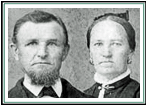 There was
always a family story that one of the children
of
August and Rika Heiden (right) died aboard the
S.S. Saxonia which was bringing the family to America from
Germany in June of 1873. She was allegedly buried at
sea but that was not mentioned in the ship's
records of the voyage. There was
always a family story that one of the children
of
August and Rika Heiden (right) died aboard the
S.S. Saxonia which was bringing the family to America from
Germany in June of 1873. She was allegedly buried at
sea but that was not mentioned in the ship's
records of the voyage.
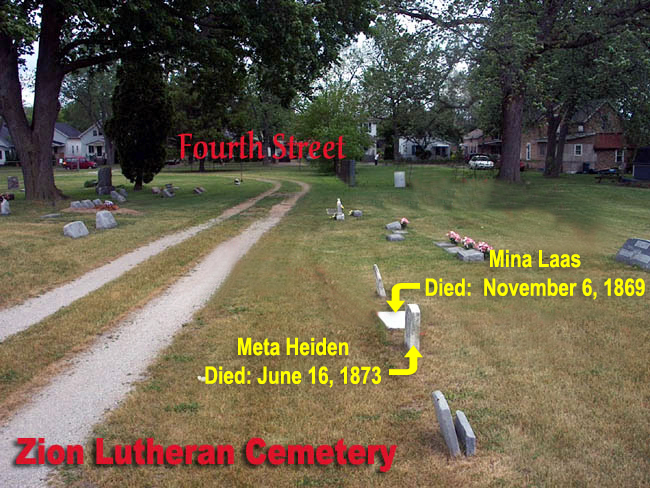
On my visit to the cemetery, I found an old,
somewhat faded,
headstone
which showed that
their child,
Meta, actually made it to America but died in Monroe
shortly thereafter.
The family arrived in New York on June 4, 1873 and
Meta died on June 16th some 12 days later and was
then buried in Zion
Lutheran Cemetery.
|
|
|
|

The second family
"mystery" that nobody could answer was exactly why
August and Rika Heiden landed in New York and
then quickly made their way directly to Monroe,
Michigan. We did know
that the family arrived in New York on June 4, 1873 and from the cemetery
findings, we discovered that their 2½ year old
daughter Meta died on June 16th only 12 days later in Monroe.
On the visit to the
cemetery, I found another vital clue in the form of
the
headstone of Mina M. Laas
just a few feet away from the resting place of
Meta Heiden. The Laas child, according to the
headstone was born on August 16th
and died on November 6th, 1869.
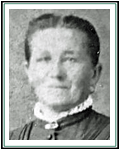 Even
more important
was that her parents' names were shown as
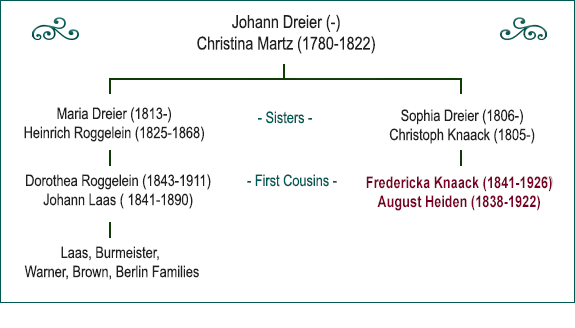
"J.& D. Laas". It turns out that
Dorothea (Regelin) Laas
(left) was Rika
Heiden's first cousin and she was married to
Johann Laas. They emigrated to America in 1867
and settled in Monroe just six years before the Heidens
arrived. They are listed in the 1870 U.S. census
for that location. Even
more important
was that her parents' names were shown as
"J.& D. Laas". It turns out that
Dorothea (Regelin) Laas
(left) was Rika
Heiden's first cousin and she was married to
Johann Laas. They emigrated to America in 1867
and settled in Monroe just six years before the Heidens
arrived. They are listed in the 1870 U.S. census
for that location.
It would seem
more than a coincidence that these first cousins would
end up so close to each other after journeying
3,800 miles
across the Atlantic from Germany and 580 miles
from New York to Michigan. Also, the fact
that Meta died only 12 days after her arrival in
America
and she is buried alongside the Laas' child in
the local Lutheran cemetery is compelling evidence.
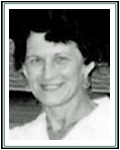 Finally, all the
members of the early extended Laas family participated
in the Heiden
Family reunions for much of the
20th century.
Caroline
(Laas) Brown
(right),
Rika
(Laas) Burmeister and
several other Laas' are prominently mentioned in the
minutes
and pictures of the early reunions.
Most of them lived in the Toledo, Ohio area and
one of them,
Charles Laas, Jr., came all the way from Texas for
several of the
summer events. Finally, all the
members of the early extended Laas family participated
in the Heiden
Family reunions for much of the
20th century.
Caroline
(Laas) Brown
(right),
Rika
(Laas) Burmeister and
several other Laas' are prominently mentioned in the
minutes
and pictures of the early reunions.
Most of them lived in the Toledo, Ohio area and
one of them,
Charles Laas, Jr., came all the way from Texas for
several of the
summer events.
So, although we have no absolute evidence, it
would be logical to think that Rika's cousin came to Monroe and encouraged
her to follow. This was a common way that these things happened back then to
help friends and relatives through this challenging process.
|
|
 |
|
 |
|
|
|
 |
|
 August
and Rika Heiden were not the only people from the
tiny town of Gross Wokern, Germany who set their
sights on a new life in America and, more
specifically, on Monroe County, Michigan. Members of
the Heiden, Rambow and Milhan families ended
up settling within a few miles of each other in
Raisinville Township after emigrating. Their lives
would intertwine more deeply as the years
progressed. August
and Rika Heiden were not the only people from the
tiny town of Gross Wokern, Germany who set their
sights on a new life in America and, more
specifically, on Monroe County, Michigan. Members of
the Heiden, Rambow and Milhan families ended
up settling within a few miles of each other in
Raisinville Township after emigrating. Their lives
would intertwine more deeply as the years
progressed.
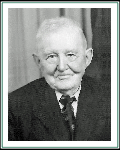
Carl "Fred" Milhan, (right) the older brother of Wlhelmine
(Milhan)
Rambow, came to America aboard the S.S. Hammonia
which departed from Hamburg on April 23, 1873 about
six weeks before August and Rika boarded their ship.
Fred came to Monroe County and, after living in
Monroe for a short time, built a log cabin on a
piece of land at
7800 South Custer Road where he would
live until his death at 100 years of age in 1950.
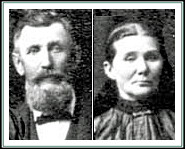
In
1874,
Heinrich and Wilhelmine (Milhan) Rambow, their
children,
Frederick (4 years old) and
Bertha (Burgard) (1 year old) along with three of Wilhelmine
and Fred's younger Milhan siblings journeyed to
Monroe County. Their mother, Maria (Möller) Milhan was also supposed to
accompany them but she died on April 10, 1874 only a few weeks before the
ship left for America.
The Rambows spent a few
years living in Dundee Township and then purchased a farm
on
7400 South Custer Road about a mile east of
Fred Milhan's farm and a couple of miles
east of
August and Rika's home at
8700 South Custer. They would spend the
rest of their lives at those addresses. The Rambow's
youngest son,
William, would be living there when he died in
1965. Agnes Heiden, wife of August and Rika's
youngest son,
John, would live in their house until her death
in 1981.
 August Heiden is
reported to have built the house where the Rambows
lived in Raisinville Township. Later, two of August's sons,
William Carl and
Herman,
would marry two of Heinrich's daughters,
Mary and
Fredareka respectively. August Heiden is
reported to have built the house where the Rambows
lived in Raisinville Township. Later, two of August's sons,
William Carl and
Herman,
would marry two of Heinrich's daughters,
Mary and
Fredareka respectively.
|
|
|
|
|
|
 |
 For more detail pictures of the headstones,
Click Here.
For more detail pictures of the headstones,
Click Here. |
|

|
|


