|
 |
|
 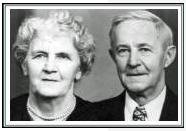 It would have been wonderful to be able to sit down again with
Grandpa and Grandma Heiden (William Carl and Mary (Rambow) Heiden) and interview them for their memories of
the Heiden Family. They might have had wonderful tales of long
forgotten days on their farm in
Raisinville Township. Perhaps they
would have known more of the history of their parents and could have
answered questions about how the Heidens came to Monroe County. It would have been wonderful to be able to sit down again with
Grandpa and Grandma Heiden (William Carl and Mary (Rambow) Heiden) and interview them for their memories of
the Heiden Family. They might have had wonderful tales of long
forgotten days on their farm in
Raisinville Township. Perhaps they
would have known more of the history of their parents and could have
answered questions about how the Heidens came to Monroe County.
 Unfortunately,
such a conversation is impossible, but, the next best thing
would be to talk to those people who grew up with them and knew
them better than anyone else, their children. On two separate
afternoons, I met with the remaining children of
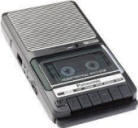
William Carl and Mary (Rambow) Heiden to discuss their memories of growing up in this family. Each
meeting was recorded. This turned out to be a tremendous help in
keeping track of what was said since, once the ball got rolling,
memories and stories began to flow across the room in several
directions at once. Unfortunately,
such a conversation is impossible, but, the next best thing
would be to talk to those people who grew up with them and knew
them better than anyone else, their children. On two separate
afternoons, I met with the remaining children of
William Carl and Mary (Rambow) Heiden to discuss their memories of growing up in this family. Each
meeting was recorded. This turned out to be a tremendous help in
keeping track of what was said since, once the ball got rolling,
memories and stories began to flow across the room in several
directions at once.
 The second conversation took place on Sunday afternoon,
September
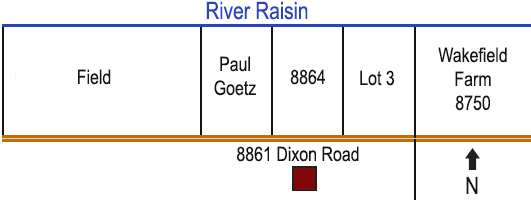
24, 1995 at the family homestead at
8861
Dixon Road which is the
current home of
William F. and Helen (Henning) Heiden.
Two children of William Carl and Mary (Rambow) Heiden, William Frank
Heiden and
Marie (Heiden) Tommelein were present along with two
daughters-in-law,
Mildred
(Mrs Arthur) Heiden and Helen (Henning) Heiden, three
grandchildren,
Mary Lou (Heiden) Opfermann,
Dianne
(Heiden) Houpt and Ralph Heiden and one son-in-law,
Morris "Brick" Tommelein. Dianne is the daughter of Wm and Helen and Ralph is the son of
Mildred. Mary Lou is the daughter of
Leo and Lucille (Smith) Heiden. The second conversation took place on Sunday afternoon,
September
24, 1995 at the family homestead at
8861
Dixon Road which is the
current home of
William F. and Helen (Henning) Heiden.
Two children of William Carl and Mary (Rambow) Heiden, William Frank
Heiden and
Marie (Heiden) Tommelein were present along with two
daughters-in-law,
Mildred
(Mrs Arthur) Heiden and Helen (Henning) Heiden, three
grandchildren,
Mary Lou (Heiden) Opfermann,
Dianne
(Heiden) Houpt and Ralph Heiden and one son-in-law,
Morris "Brick" Tommelein. Dianne is the daughter of Wm and Helen and Ralph is the son of
Mildred. Mary Lou is the daughter of
Leo and Lucille (Smith) Heiden. |
|
|
|
|
|
|
|
 |
|
 Ralph Heiden - Do you recall any stories about your grandfather,
August Heiden ? Ralph Heiden - Do you recall any stories about your grandfather,
August Heiden ?
William Frank Heiden - About all I remember of him is going over to their place
on South Custer and he would be sitting in that old high back chair.
Marie (Heiden) Tommelein - And he had that earphone in his ear so he could hear.
William Frank Heiden - Other than that, I really don’t remember anything else
about him.
Ralph Heiden - We always heard a story about when they came over that a
little daughter died on the ship. Well,
Myrna (Drake) Bishop who is
Bertha (Heiden) Drake’s daughter and granddaughter of
Herman Heiden, was told that
the little girl lived through the voyage but died here and is buried
in Monroe. Mary Lou did some detective work and found that she was
buried in Zion Lutheran Cemetery in Monroe on June 16, 1873 only 12
days after they landed in New York.
Marie (Heiden) Tommelein - And there was a gravestone for her?
Ralph Heiden - Yes.
Mildred (Roggerman) Heiden - There was a
Laas baby buried next to her too.
Ralph Heiden - That’s another question. I keep hearing about the
Laas’ but
nobody really knows what relation they were to the Heidens.
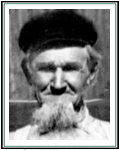
 Marie (Heiden) Tommelein - They were always there at the reunions. Marie (Heiden) Tommelein - They were always there at the reunions.
William Frank Heiden - I think it was
Bill Laas
(right) from Texas. They came every year.
Marie (Heiden) Tommelein -
There was
Miss Libbie Laas. I don’t think she ever got
married but I can remember her being there.
William Frank Heiden - Maybe they came over from Germany together or something.
There had to be some connection. They were always big at the
reunions along with the
Burmeisters.
Mary Lou (Heiden) Opfermann - Since
Meta was buried next to a
Laas, it makes you wonder
if they had some early connection.
Marie (Heiden) Tommelein - Did the Laas’ come over on the boat with August?
Ralph Heiden - No. The one (Laas child) that is buried at Zion Cemetery was buried in
1869, four years earlier. So, they were already here.
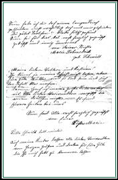 Here’s an idea that I’m starting to wonder about. August, my great
grandfather, had a half sister. In the 1920's, her granddaughter
sent a series of letters to August’s wife, Rika. Here’s an idea that I’m starting to wonder about. August, my great
grandfather, had a half sister. In the 1920's, her granddaughter
sent a series of letters to August’s wife, Rika.
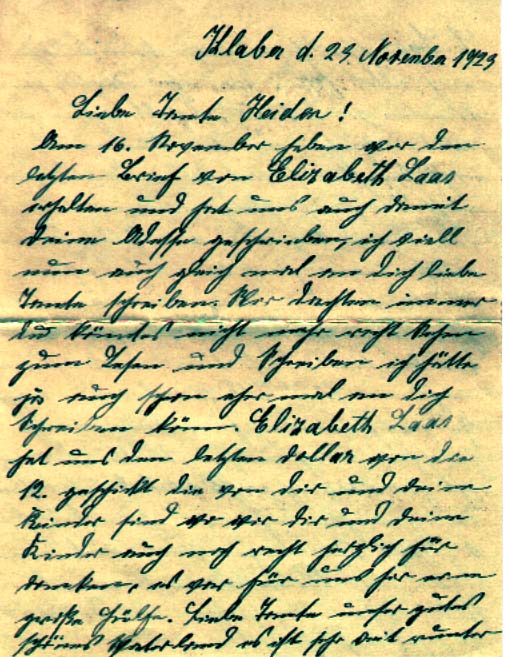
I finally found an elderly German lady who could read the old script
writing and is translating those letters word for word. I have about
5 or 6 of them done now.
In one of the letters, they say that they were corresponding with
Elizabeth Laas
(Libbie Laas). So, perhaps, the
Laas’ are descendants of
August Heiden's half-sister. They would be a distant relative but still
related. I don’t have any evidence to draw that conclusion but it
might be that way.
Mary Lou (Heiden) Opfermann - That could be the connection.
|
|
 |
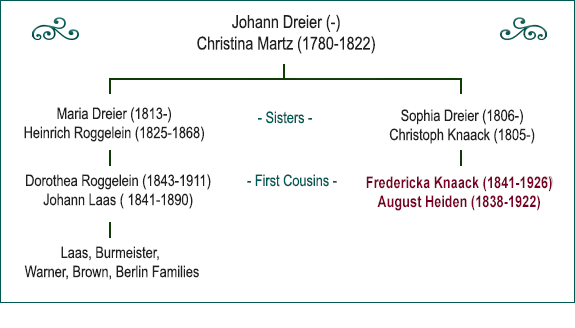
 Actually, the members of the Laas' family were related to August Heiden's wife, Rika
(Knaack) as shown on the following chart: Actually, the members of the Laas' family were related to August Heiden's wife, Rika
(Knaack) as shown on the following chart: |
|
 |
|
 |
|
|
|
 |
|
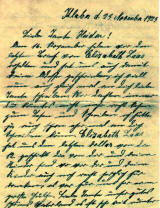 Ralph Heiden - The letters are rather sad overall. They were having some
very tough times in Germany then and they were always asking their
Aunt Rika, my great grandmother, for money. Ralph Heiden - The letters are rather sad overall. They were having some
very tough times in Germany then and they were always asking their
Aunt Rika, my great grandmother, for money.
Mildred (Roggerman) Heiden - In one of them, they ask for some money for a house and
some land. Then, later they say they bought the house but needed
more money for the land.
Marie (Heiden) Tommelein - Did they ever help them?
Ralph Heiden - Yes, they sent money when they could and they were always
very appreciative of it and told what the money would buy.
Brick Tommelein - My dad said that at that time, everyone over in Europe
called America “the land of opportunity.”
Ralph Heiden - A lot of people here were helping their relatives then too.
In one of the letters, they ask Rika to send her letters registered
because people were stealing things from mail from America because
those envelopes were likely to have money in them.
Helen (Henning) Heiden - Now are these letters all from
Mecklenburg?
Ralph Heiden - Yes. They are from the area called Mecklenburg and the port
city of Rostock. The little villages where our ancestors came from
are the size of
Grape and Maybee and they are about 50 miles from
Rostock.
 Helen (Henning) Heiden - From the Hennings, I heard them say that the people were
like slaves back then in Germany. They worked for all these big rich
people. They provided pay for them and took care of them but they
couldn’t get ahead. They didn’t want them to get married because
there were already too many of them to take care of. That is where
the Hennings came from too. Helen (Henning) Heiden - From the Hennings, I heard them say that the people were
like slaves back then in Germany. They worked for all these big rich
people. They provided pay for them and took care of them but they
couldn’t get ahead. They didn’t want them to get married because
there were already too many of them to take care of. That is where
the Hennings came from too.
Mildred (Roggerman) Heiden - Didn’t you say that our name should be something other
than Heiden?
Ralph Heiden - Yes, my great grandmother,
Maria Heiden, did not marry the
father of August. So, he took her name rather than his father’s
which was
Kanseyer
or Canseyer.
Helen (Henning) Heiden - That’s the same way with my grandpa Henning. Grandma wasn’t
married when she had those two kids.
Ralph Heiden - That was a real common occurrence back then.
Mildred (Roggerman) Heiden - They wouldn’t let you get married unless you could support
yourself.
Ralph Heiden - They technically weren’t slaves but there was nowhere else
for them to go except to another big estate to work and they were
full too. Also, the landowner had the responsibility to take care of
the people on his land so he was stuck too.
That is why they pushed a lot of them to leave and go to America.
Also, the illegitimacy rate went way up because even though they
weren’t legally allowed to marry, people continued to form couples
and do what they needed to do.
Helen (Henning) Heiden - You wonder why the Heidens would come here but they said on
the Henning side that they would send money back to Germany to help
others come here.
Ralph Heiden - But with the Heidens, we don’t know who was here to pave the
way for them. Maybe with this Laas connection, there might be
something to go on.
The
Rambows came a year later. They came here in 1874 and I don’t
know if they came from the same part of Germany as the Heidens. I
haven’t looked into that yet. (See the note below)
I think about the only way we are going to learn why the Heidens
came here is if we stumble onto somebody in one of the other
branches that has an old box of papers up in the attic that someone
gave them long ago. Otherwise, the reason may be lost to history.
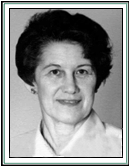 Mary Lou (Heiden) Opfermann - You might get something from
Caroline Brown
(right) too. Helma was
going to check with her. She and her husband, Bill, used to attend
all the old reunions. He used to take movies of the reunions. She is
somehow related to the Laas side. Mary Lou (Heiden) Opfermann - You might get something from
Caroline Brown
(right) too. Helma was
going to check with her. She and her husband, Bill, used to attend
all the old reunions. He used to take movies of the reunions. She is
somehow related to the Laas side.
William Frank Heiden - She was
Uncle John Laas’ daughter.
Marie (Heiden) Tommelein - She came to our place in Florida one time looking for
Helma’s address.
Ralph Heiden - Perhaps she would have the old films laying around
someplace. We could put them on videotape.
Marie (Heiden) Tommelein - I don’t remember him taking movies.
Mary Lou (Heiden) Opfermann - Oh, yes. Don’t you remember everybody trying to duck out
of the way all the time?
Helen (Henning) Heiden - You know,
Aunt
Agnes probably had some old papers.
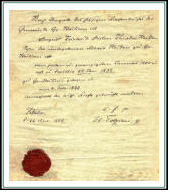 Ralph Heiden - Yes, that is where I got a lot of these old documents. They
had the names of the old villages in Germany where August and his
wife and three of their children were born. There was also a
document that I think is August’s
discharge paper from the army. He
served from 1859 to 1861. Ralph Heiden - Yes, that is where I got a lot of these old documents. They
had the names of the old villages in Germany where August and his
wife and three of their children were born. There was also a
document that I think is August’s
discharge paper from the army. He
served from 1859 to 1861.
Mildred (Roggerman) Heiden - His
naturalization papers were there too.
Ralph Heiden - Yes, the papers
where he applied for citizenship and then was granted U.S.
citizenship.
|
|
Further
research by
Karen (Berns) Wheaton
and myself found that the Rambows and Heidens lived
in the same little village of
Gross Wokern, Germany. Caroline Brown's maiden
name was Laas. |
|
|
|
|
|
 |
|
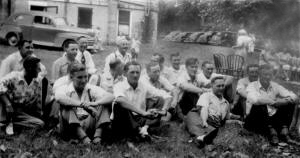 [Looking at some old pictures of the
Heiden Family Reunion and family
gatherings.Click on the picture to the left for a larger version
with caption. ] [Looking at some old pictures of the
Heiden Family Reunion and family
gatherings.Click on the picture to the left for a larger version
with caption. ]
Mary Lou (Heiden) Opfermann
- Is that you in the back row there at the reunion, Brick?
Brick Tommelein - I don’t know. I only remember one time going to the reunion.
Ralph Heiden - That picture was taken over at the
Grange Hall sometime in
the late 40's.
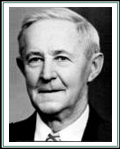 Marie (Heiden) Tommelein - Yes, I can see Pa
(Wm Carl Heiden right) there and I recognize a lot of these other
people but I can’t tell if that is you or not. Marie (Heiden) Tommelein - Yes, I can see Pa
(Wm Carl Heiden right) there and I recognize a lot of these other
people but I can’t tell if that is you or not.
Helen (Henning) Heiden - I have a couple of albums with some old pictures. Maybe you
already have them all.
Ralph Heiden - You never know. I’d like to take a look at them.
Marie (Heiden) Tommelein - The caption under this picture says that’s
Libbie and me
sitting on grandma Heiden’s lap.
Mary Lou (Heiden) Opfermann - We can spot you in all these pictures because you had
that short, blond hair, Marie.
|
|
|
|
|
|
 |
|
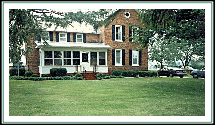
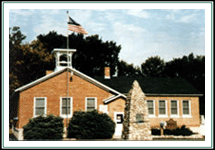
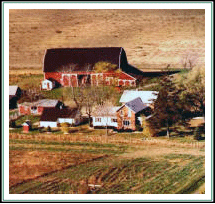 Ralph Heiden - Grandpa
(William Carl) Heiden bought this farm in 1909 or there about.
There are stories about great grandpa
(August) Heiden doing the masonry work
on the house. Do you know anything about that? Ralph Heiden - Grandpa
(William Carl) Heiden bought this farm in 1909 or there about.
There are stories about great grandpa
(August) Heiden doing the masonry work
on the house. Do you know anything about that?
William Frank Heiden - I heard them talking about walking over here from
South
Custer when Pa was about 13 or 14 to help his dad do the brick work.
Ralph Heiden - Then that would have been about 1890. So that was when
someone else owned it?
William Frank Heiden - Yes, I think it was the Langs or someone else who owned
the farm at that time.
Ralph Heiden - The 1873 county plat book I think lists the owner of this
farm as a man named Meyers.
William Frank Heiden - They called him “Milky Meyers.” I always heard Pa talking
about him.
Ralph Heiden - The plat map also showed a piece of landlocked property
located on the back of this property. There wasn’t any access from
Ida Maybee Road, Dixon, Mulheisen or South Custer.
 William Frank Heiden - That would be on the back end of Suhciks farm. It was the
Stokes (Stock) that had an old house back in there on a hill. Could be some
relation to Bill Stokes (Stock),
Aunt
Emma’s (right) relations. William Frank Heiden - That would be on the back end of Suhciks farm. It was the
Stokes (Stock) that had an old house back in there on a hill. Could be some
relation to Bill Stokes (Stock),
Aunt
Emma’s (right) relations.
Ralph Heiden - There also used to be a house on the north side of the road
just east of here. I know Mary Lou was born there and
Carl and Anita
lived there for a while too.
William Frank Heiden - Carl lived next door here where Jessie Barnes lived.
Verdell was born there.
Edna and Henry lived in the other place for a while and
Bill and
Alice (Brossia) Heiden lived there too. Bill worked the farm. That was when
old Jesse Wakefield owned it.
|
|
|
|
Wm Carl Heiden
bought the farm on April 1, 1909 which was his 35th
birthday. August Heiden was a brick mason by trade.
Also, although the family of Emma (Mrs Heinrich) Heiden was often
referred to as the "Stokes", but in the
obituaries of other family
members, they were always under the name Stock.
|
|
|
|
|
|
 |
|
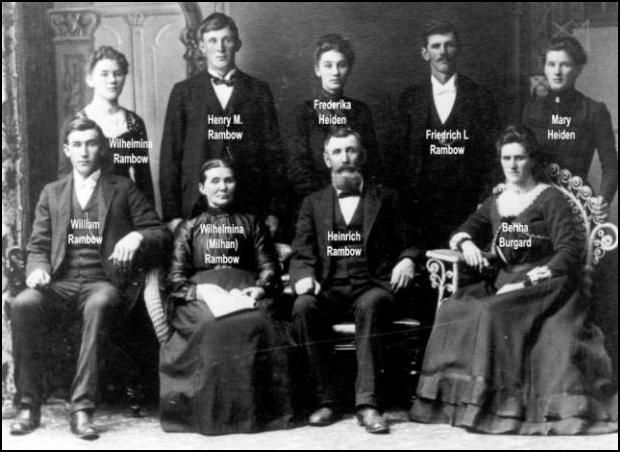 |
[Looking at family pictures again.]
Helen (Henning) Heiden - Those are the
Rambows there.
Uncle Will and
Aunt Minnie.
That’s Aunt Reka.
William Frank Heiden - They more or less looked alike. They were all pretty big
women.
Ralph Heiden - It’s interesting to look at
Grandma
(Mary) and how she changed
over
the years.
Mary Lou (Heiden) Opfermann - She was really a pretty young girl in the Rambow group
picture.
William Frank Heiden - She held up awfully good for someone who had 13 children.
|
|
|
|
Uncle
Will was
William Rambow. Aunt Minnie was
Will's sister,
Wilhelmina Rambow and Aunt Reka was
Fredareka "Reka" (Rambow)
Heiden who was married to Wm Carl's younger brother,
Herman Heiden.
Mary was the wife of
Wm Carl Heiden.
|
|
|
|
|
|
 |
[Reading through the minutes of the
Heiden Family Reunion.]
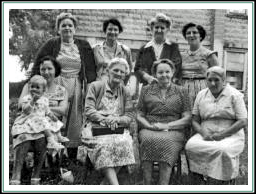 Brick Tommelein - Look at this, 16 gallons of beer, 250 ice cream cones, 7½
gallons of ice cream. All this stuff for the reunion and it only
cost 25 dollars! Brick Tommelein - Look at this, 16 gallons of beer, 250 ice cream cones, 7½
gallons of ice cream. All this stuff for the reunion and it only
cost 25 dollars!
William Frank Heiden - That ice cream was something else. It was really good.
They put it in those great big insulated boxes.
Mary Lou (Heiden) Opfermann - We had lemonade in those big crocks too.
Ralph Heiden - The first few years, they debated on whether to have
everyone bring their own food and drink.
Brick Tommelein - That was 1938, William.
Dianne (Heiden) Houpt - Did anyone take minutes of this year’s reunion?
Ralph Heiden - I wrote a few notes up and called it the 59th reunion
although technically it’s the 58th. The one in 1959 was “postponed”
but they gave it a number anyway.
All the minutes from the old reunions will be in the final book.
|
|
|
|
Click
on the picture to see a larger version with
captions. |
|
|
|
|
|
 |
[Looking at a picture.]
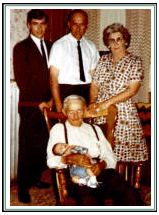 Ralph Heiden - That is the only five generation picture taken with Grandpa
Heiden. Ralph Heiden - That is the only five generation picture taken with Grandpa
Heiden.
Helen (Henning) Heiden - Who is that then?
Ralph Heiden - There’s
Edna,
Walter, Lauren,
Grandpa and Lauren’s first
son, Sean. Walter made me this nice print since he still had the
negative.
|
|
|
|
We
have a number of examples of various families in 4 or 5
generation pictures.
Click Here |
|
|
|
|
|
 |
|
Marie (Heiden) Tommelein -
Denny got us an old newspaper for 1945, the year we were
married. It was fun to look through but sometimes you’d look at a
price and say, “God, it couldn’t have been that cheap back then!”
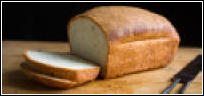 I remember the first year after we were married, bread was still
rationed after the war. We had a neighbor who used to go and stand
in line to get a loaf of bread. She would take her 16 year old
daughter along with our ration stamp and get us a loaf too. I was at
home with the baby and couldn’t go. I remember the first year after we were married, bread was still
rationed after the war. We had a neighbor who used to go and stand
in line to get a loaf of bread. She would take her 16 year old
daughter along with our ration stamp and get us a loaf too. I was at
home with the baby and couldn’t go.
You had to wait in line at the Kroger store to get a loaf of bread.
Helen (Henning) Heiden - We only had one car in those days too so you couldn’t just
go when you wanted to either.
Marie (Heiden) Tommelein - No. You were lucky if you had one car!
|
|
|
|
|
|
 |
[Looking at a picture.]
  Dianne
(Heiden) Houpt - Isn’t
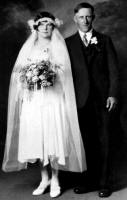
Anita’s wedding dress just gorgeous? Dianne
(Heiden) Houpt - Isn’t
Anita’s wedding dress just gorgeous?
William Frank Heiden - She worked for the Comstock family in Monroe. Then Howard
Comstock bought the Wakefield place next door. Carl and Anita lived
there for a while too.
Marie (Heiden) Tommelein -
Verdell was born there and
Velda was born here in Pa’s
house.
|
|
|
|
 |
|
 Helen (Henning) Heiden - Was your brother,
David, born here, Mary Lou? Helen (Henning) Heiden - Was your brother,
David, born here, Mary Lou?
Mary Lou (Heiden) Opfermann - He was born while my parents lived here but he was born
in the hospital.
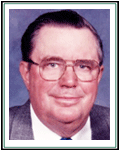 Marie (Heiden) Tommelein -
Roger
(right)
was born over to the store on the corner of
Ida-Maybee
and South Custer. Marie (Heiden) Tommelein -
Roger
(right)
was born over to the store on the corner of
Ida-Maybee
and South Custer.
Mary Lou (Heiden) Opfermann - Remember when you used to stay with us sometimes when you
couldn’t get home because the road was in bad shape?
Marie (Heiden) Tommelein - The night he was born, your dad went to get Mrs Spohr.
|
|
|
|
|
|
 |
|
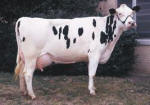 William Frank Heiden - There was another
small house down the road on the east
end of the
Wakefield farm and that is where Mary Lou was born. They
had that little house for the guy who worked the farm to live in. William Frank Heiden - There was another
small house down the road on the east
end of the
Wakefield farm and that is where Mary Lou was born. They
had that little house for the guy who worked the farm to live in.
Wakefield lived where Jesse Barnes lived
(8750 Dixon Rd) and they didn’t want to
work the farm. Old man Wakefield gave me a cow on the condition that
I would give them some of the milk. I used to take over a couple of
quarts a day to them.
When Wakefield died, he gave me a gold watch and he left
Art a horse
and buggy.
Marie (Heiden) Tommelein - That was a nice watch.
William Frank Heiden - Here it is. I still have it.
Brick Tommelein - Does it run, William?
William Frank Heiden - Yes we had the movement replaced. It’s got a porcelain
dial.
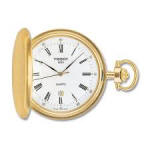 Helen (Henning) Heiden - We took it down to a jeweler to see how much it might be
worth in case somebody might break in and take it. They told us it’s
not pure gold because it wears off over time. Helen (Henning) Heiden - We took it down to a jeweler to see how much it might be
worth in case somebody might break in and take it. They told us it’s
not pure gold because it wears off over time.
William Frank Heiden - I’ve had it seventy years and I rarely carry it in my
pocket yet it’s all worn off. Old Wakefield must have carried it for
a long time before he died.
Brick Tommelein - Some of those old railroad watches used to be worth
something.
Ralph Heiden - Why did Mr. Wakefield leave things to you boys?
William Frank Heiden - Well, we always waited on him and did things for him all
the time.
Brick Tommelein - Mil, was that when
Art started courting you when he had that
buggy?
Mildred (Roggerman) Heiden - No, he had an old Model T Ford by the time we starting
going out.
 Marie (Heiden) Tommelein - Remember we used to play tricks on old Wakefield? It was
after we got a telephone. When Ma and Pa would be gone, we would
watch to see when he was outside and then we’d call him up. As soon
as he got in the house, we’d hang up. Later he would tell Pa,
“Somebody kept calling me all day today. By the time I got there,
they’d hang up!” Marie (Heiden) Tommelein - Remember we used to play tricks on old Wakefield? It was
after we got a telephone. When Ma and Pa would be gone, we would
watch to see when he was outside and then we’d call him up. As soon
as he got in the house, we’d hang up. Later he would tell Pa,
“Somebody kept calling me all day today. By the time I got there,
they’d hang up!”
Ralph Heiden - I didn’t think you guys did that kind of stuff.
(laughs)
Marie (Heiden) Tommelein - Oh, yes we did but Pa never knew it.
|
|
|
|
|
|
 |
|
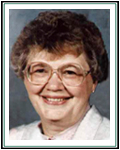 Mary Lou (Heiden) Opfermann - What kind of house was the one that I was born in? It has
been gone for a long time now. (8530
Dixon Road) Mary Lou (Heiden) Opfermann - What kind of house was the one that I was born in? It has
been gone for a long time now. (8530
Dixon Road)
William Frank Heiden - It was a nice enough house. I think it had one bedroom
upstairs. That was where Billy Miller and what’s her name lived.
Marie (Heiden) Tommelein - Helen MacDowell. He married that woman with a little girl
and we used to go to school together.
|
|
|
|
|
|
 |
|
William Frank Heiden - We used to go sparrow hunting with him
(Billy Miller) back when there was
a bounty on sparrows. He used to put the dead sparrows in his
pockets and he’d go to divide them up and we’d sneak into his other
pocket and take one out while he wasn’t looking.
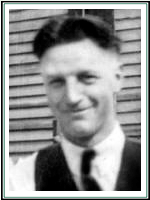 Marie (Heiden) Tommelein - I used to hold the flashlight for
Art and
Heinie Heiden
(right) when
they would go after sparrows at night. They got 2 cents a piece and
I never got anything! Marie (Heiden) Tommelein - I used to hold the flashlight for
Art and
Heinie Heiden
(right) when
they would go after sparrows at night. They got 2 cents a piece and
I never got anything!
William Frank Heiden - I used to go into that house a lot of times. There was a
barn across the road on the south side. They had a corn crib and
chicken coop on the north side where the house was.
The red garage out in our drive came from that house when they tore
it down. The beams and things came from that old house.
|
|
|
|
English
sparrows are a non-native species and in 1887
Michigan paid a bounty of 1 cent per dead bird
brought to the county clerk's office. I was unaware
of it as a boy growing up in the 1950s and 60s but
technically, the law was still in effect until
repealed in 2000. |
|
|
|
|
|
 |
[Looking at old family reunion pictures
from the 1920's]
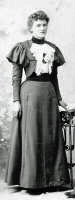 Brick Tommelein -
Mother
(Mary) Heiden (right) was a tall woman. It didn’t seem like it at
the time but when you look at her in these pictures, she seems quite
tall. Brick Tommelein -
Mother
(Mary) Heiden (right) was a tall woman. It didn’t seem like it at
the time but when you look at her in these pictures, she seems quite
tall.
Mary Lou (Heiden) Opfermann - All the
Rambows were big people.
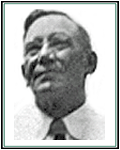
Ralph Heiden - In this one old picture that guy with the hat and string tie
looks like he just got back from the wild west.
Helen (Henning) Heiden - He looks like Wyatt Earp!
Ralph Heiden - This was about 1921 or so, I think.
William Frank Heiden - Maybe that was old
Bill Laas from Texas. He might look
like that.
|
|
|
|
|
|
 |
|
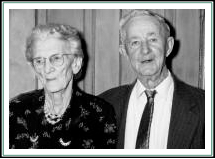 Ralph Heiden - I asked people to write down a little remembrance of
Grandpa
and Grandma and those have turned out to be really nice. Ralph Heiden - I asked people to write down a little remembrance of
Grandpa
and Grandma and those have turned out to be really nice.
Brick Tommelein - Here, one of our kids says that Grandpa used to reward him
with a little sip of beer.
Marie (Heiden) Tommelein - Pa always knew all of his grandchildren by name. When you
think of it, that was amazing since he had so many of them.
William Frank Heiden - And it’s not like today when your grandchildren are spread
all over and you don’t get to see them very often. Back then, they
got to see them all the time.
It’s hard sometimes to keep track of them especially with the names
they come up with now. You don’t see many Johns or Bills.
Marie (Heiden) Tommelein - Tell me about it!
Mildred (Roggerman) Heiden - My grandchildren go from A to Z.
Adam to
Zachary.
Helen (Henning) Heiden - Tom and Janice’s last grandchild is named
Peyton.
Marie (Heiden) Tommelein - Our neighbor’s have a little girl they named Montgomery
Alicia! That poor kid when she goes to school. She has a long life
ahead of her.
|
|
|
|
See
the entire contents of the
Written Rembrances section. |
|
|
|
|
 |
|
|
|





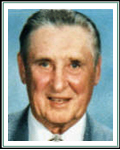




 Dianne (Heiden) Houpt - Did they shut the
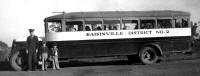 Dianne (Heiden) Houpt - Ralph, do you remember that we started out with the red,
white and blue buses and then the yellow ones came along later. At
school, they never seemed to line them up the same place every
night. They would line up in the order that the drivers happened to
pull up. Some nights, we would get lost.
Dianne (Heiden) Houpt - Ralph, do you remember that we started out with the red,
white and blue buses and then the yellow ones came along later. At
school, they never seemed to line them up the same place every
night. They would line up in the order that the drivers happened to
pull up. Some nights, we would get lost.
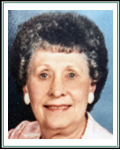
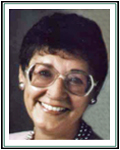
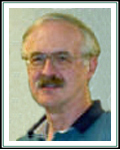
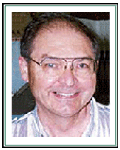 Ralph Heiden - Myrna (Drake) Bishop’s husband, Jim,
(left) is a professor at Notre Dame so
we have been emailing things back and forth for a while now. It is
a local call so it doesn’t cost anything.
Ralph Heiden - Myrna (Drake) Bishop’s husband, Jim,
(left) is a professor at Notre Dame so
we have been emailing things back and forth for a while now. It is
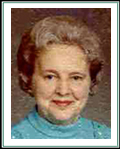
a local call so it doesn’t cost anything. 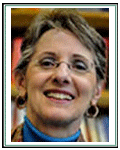 Ralph Heiden - Margie
(right) is a professor of linguistics at Purdue University.
She has her Ph.D. from the University of Illinois.
Ralph Heiden - Margie
(right) is a professor of linguistics at Purdue University.
She has her Ph.D. from the University of Illinois.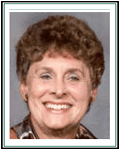
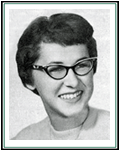 Ralph Heiden - It’s also amazing to look at where all the kids have gone to
college. Some of
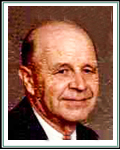
Carol’s (Toburen) (left) children went to Millersville
University in Pennsylvania.
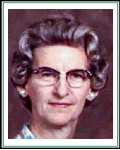
Janice’s (Clark) (right) went to Louisiana Tech
and Northeast Louisiana.
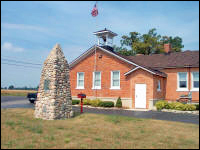
Ralph Heiden - It’s also amazing to look at where all the kids have gone to
college. Some of
Carol’s (Toburen) (left) children went to Millersville
University in Pennsylvania.
Janice’s (Clark) (right) went to Louisiana Tech
and Northeast Louisiana.
 Ralph Heiden - What do you two (
 William Frank Heiden -